
Extended Ego Sculptural footwear
Extended Ego is an experimental footwear project developed as a graduation project at the Academy of Fine Arts in Sarajevo.
The project examines the high heel as more than an object of adornment, as a structural and spatial form in its own right.
Its starting point is a simple proposition:
What happens when the shoe is considered architecture rather than accessory?
Conventional footwear construction gives way to an exploration of geometry, balance, repetition and proportion. The relationship between the foot and the space around it becomes central, transforming the shoe from a functional object into an extension of the body and its surrounding architecture.
The resulting forms occupy an ambiguous territory between footwear, sculpture and architectural object, designed not simply to be worn, but to alter the perception of the body within space.
The visual language of the collection developed through my interest in Constructivism and modern architectural structures.
In particular, the work was influenced by the sculptural constructions of Naum Gabo and the structural language of Santiago Calatrava.
The project draws on an interest in how both approached structure not simply as a functional element, but as a means of creating movement, tension and visual rhythm.
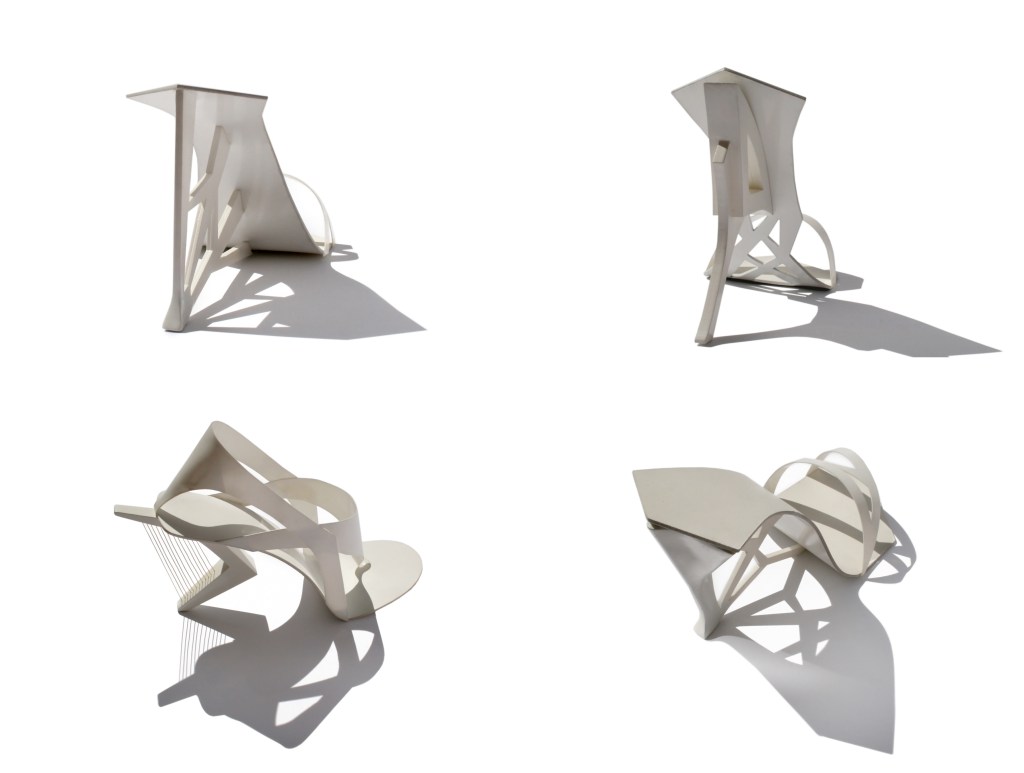
Architectural Shoe
The Architectural Shoe explores the heel as a structural framework. Rather than hiding the construction, the design makes it the central visual element. Lines intersect, support one another and extend beyond what would normally be considered necessary for a shoe. The result is deliberately closer to a small architectural object than conventional footwear.
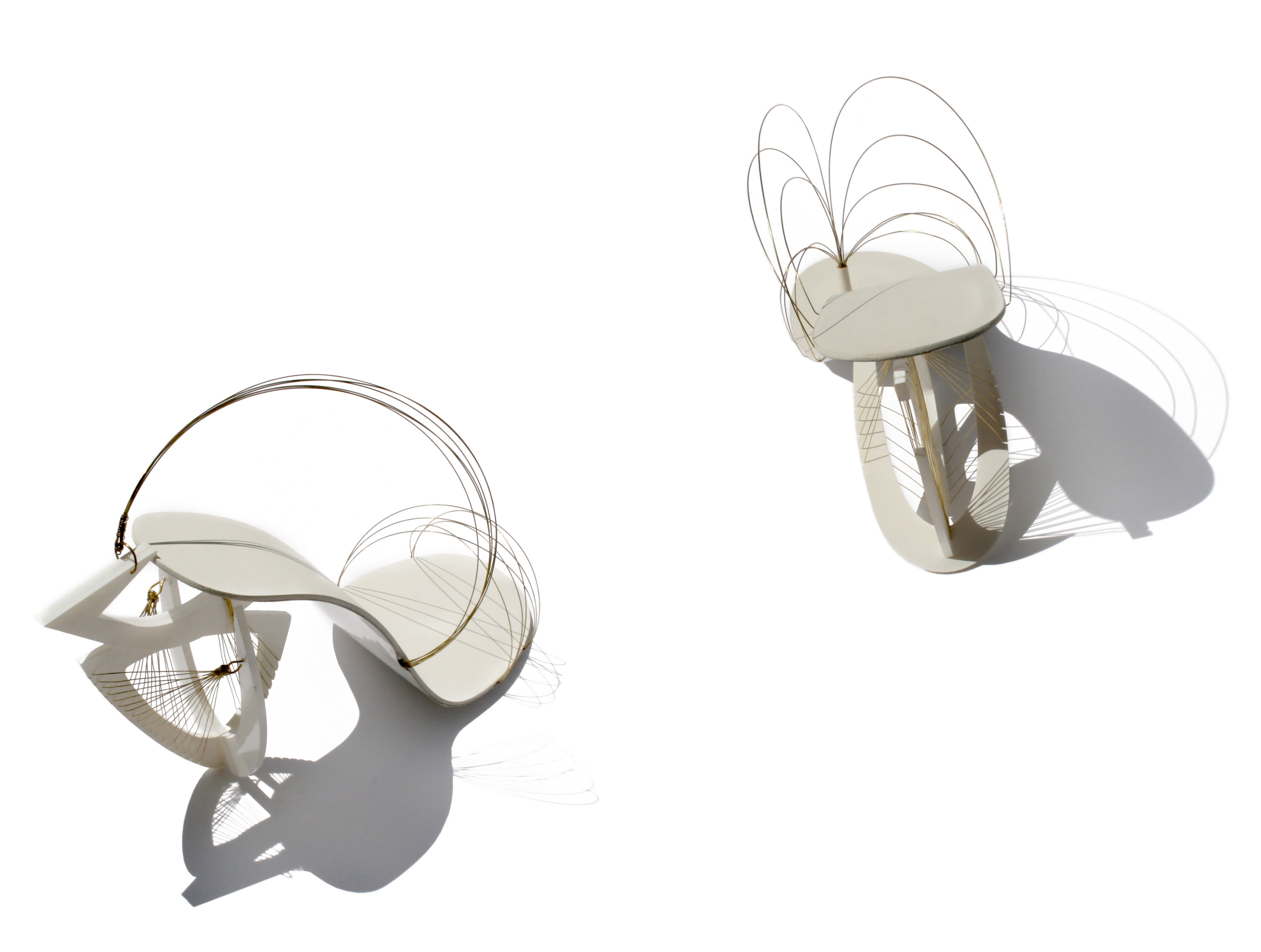
Linear Constructions
The Linear Constructions explore the relationship between line and volume. The forms are created through a reduced visual vocabulary: repetition, tension, intersection and negative space. The absence of conventional decorative elements allows the construction itself to become the visual identity of the object.

Wings / Variations
The Wings series developed from the idea of extending the shoe beyond the physical boundaries of the foot. The forms create an exaggerated relationship between body and object, introducing a sense of movement and instability while remaining carefully balanced.
 Tea Petrovic Shoes